QUICK SUMMARY
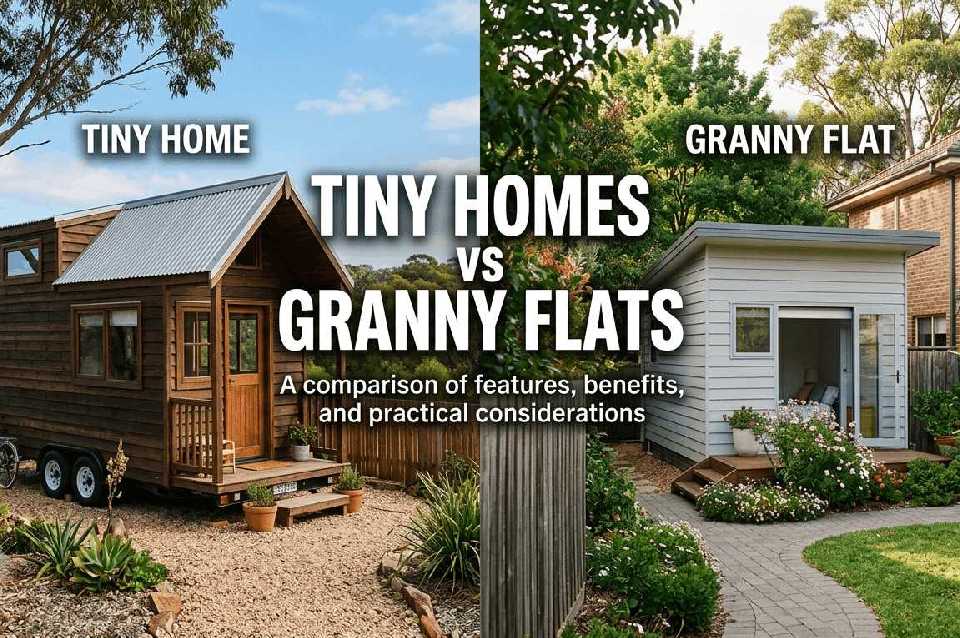
Tiny homes and granny flats are both popular housing alternatives in Australia, but they serve different purposes.
Tiny homes offer flexibility, faster setup, and lower upfront costs. Granny flats provide more permanence and are often easier to finance under traditional property structures.
The right choice depends on your land, budget, and how you plan to use the space.
INTRO
As housing costs continue to rise, more Australians are looking for practical alternatives that suit their lifestyle and financial goals.
Two of the most common options are tiny homes and granny flats.
While they may seem similar at first, they differ in important ways such as cost, approval process, flexibility, and long term use.
Understanding these differences helps you make a decision that aligns with your needs.
KEY DIFFERENCE AT A GLANCE
The main difference comes down to how each option is built and used.
- Tiny homes are typically movable and flexible
- Granny flats are fixed structures tied to the land
This difference affects everything from approvals to investment potential.
COST COMPARISON
Tiny Homes
Generally require a lower upfront investment. Most builds fall within a range that makes them accessible for many buyers.
Read Tiny Home Cost Guide Australia
Granny Flats
Usually involves higher costs due to construction, permits, and connection to utilities.
They often require a larger budget and longer timelines.
FLEXIBILITY AND USAGE
Tiny Homes
Offer greater flexibility in placement and use. They can be relocated and adapted for different purposes.
Granny Flats
Are permanent structures. Once built, they remain fixed to the property.
APPROVAL AND REGULATIONS
Tiny Homes
Approval depends on how the home is classified and where it is placed.
Read Are Tiny Homes Legal in Australia
Granny Flats
Typically follow standard building regulations and require council approval as a permanent dwelling.
BUILD TIME
Tiny Homes
Can be completed much faster due to simpler construction methods.
Granny Flats
Take longer as they follow traditional building processes.
INVESTMENT POTENTIAL
Tiny Homes
Popular for short-stay accommodation and flexible rental use.
Granny Flats
Often used for long term rental or family accommodation.
WHICH ONE SUITS YOU
The best choice depends on your situation.
Choose a tiny home if you want:
- A lower upfront investment
- Faster setup
- Flexible usage
- A lifestyle focused solution
Explore Our Custom Tiny Homes Services
Choose a granny flat if you want:
- A permanent structure
- Long term property integration
- Traditional financing options
- Fixed residential use
COMMON QUESTIONS PEOPLE ASK
Many buyers are unsure which option fits their needs best.
The decision usually comes down to how the space will be used and how much flexibility is required.
Get In Touch
Still Deciding Between Your Options
Choosing the right solution can make a big difference in both lifestyle and long term value.
If you are considering a tiny home, our team can guide you through the process and help you make the right choice.
Request a Quote or Speak With Our Team
Frequently Asked Questions
Yes, tiny homes usually have a lower upfront cost compared to
In many cases, granny flats can increase property value, as they are permanent structures.
Granny flats often follow clearer regulations, while tiny homes depend on classification and location.
Yes, many people use tiny homes for rental or short stay accommodation.
Yes, many tiny homes are designed to be relocatable.
Yes, they typically take longer due to traditional construction methods.
Both can be good investments, but tiny homes offer more flexibility while granny flats provide stability.
This depends on council regulations and land zoning rules.