QUICK SUMMARY
Tiny homes are legal in Australia, but they are regulated differently depending on the state, council, and how the home is used.
In most cases, approval is required before placing a tiny home on land. The rules vary across NSW, VIC, and QLD, especially regarding zoning, utilities, and whether the home is considered a permanent dwelling.
Understanding local council requirements is essential before starting your project.
Tiny homes are legal in Australia, but they are regulated differently depending on the state, council, and how the home is used.
In most cases, approval is required before placing a tiny home on land. The rules vary across NSW, VIC, and QLD, especially regarding zoning, utilities, and whether the home is considered a permanent dwelling.
INTRO
Tiny homes are becoming more popular across Australia as people look for flexible and practical housing options.
However, one of the most common concerns is legality.
The answer is not a simple yes or no. Tiny homes are allowed, but they must meet certain requirements depending on where and how they are used.
This guide explains how regulations work across different states and what you should consider before moving forward.
Tiny homes are becoming more popular across Australia as people look for flexible and practical housing options.
However, one of the most common concerns is legality.
The answer is not a simple yes or no. Tiny homes are allowed, but they must meet certain requirements depending on where and how they are used.
ARE TINY HOMES LEGAL IN AUSTRALIA
Tiny homes are legal in Australia, but they are not classified in the same way as traditional houses.
Their legality depends on factors such as:
- How the home is constructed
- Whether it is fixed or movable
- Where it is placed
- How it is used
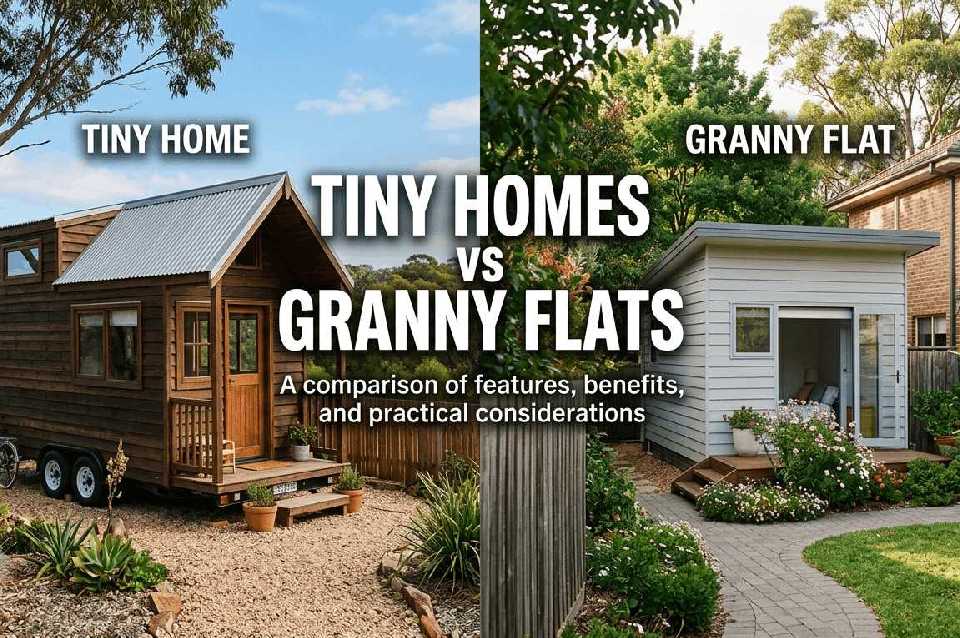
In many cases, tiny homes fall under categories such as caravans, secondary dwellings, or relocatable structures.
Because of this, approval requirements can vary significantly.
RULES DIFFER BY STATE
Each state has its own approach when it comes to tiny homes.
NSW (New South Wales)
In NSW, tiny homes are generally allowed but must comply with local council regulations.
They may be classified as:
- Secondary dwellings
- Moveable structures
- Caravan style accommodation
Approval often depends on zoning and intended use.
View Our Tiny Homes NSW Services
VIC (Victoria)
Victoria focuses heavily on planning regulations and land use.
Tiny homes may require:
- Planning permits
- Compliance with building codes
- Approval based on land zoning
Regional areas may offer more flexibility compared to metropolitan zones.
View Our Tiny Homes VIC Services
QLD (Queensland)
In Queensland, rules vary by council and property type.
Tiny homes can be used in:
- Rural areas
- Private land setups
- Short stay accommodation
However, approvals are still required depending on how the home is used.
View Our Tiny Homes QLD Services
DO YOU NEED COUNCIL APPROVAL
In most cases, council approval is required before placing a tiny home on land.
This depends on:
- Zoning regulations
- Land classification
- Intended use of the home
Some setups may be allowed under specific conditions, but it is always important to confirm with local authorities
WHAT AFFECTS APPROVAL
Several factors influence whether a tiny home can be approved.
Land Zoning
Different zones have different restrictions.
Utility Access
Connection to services can impact classification.
Permanent vs Temporary Use
How the home is used affects approval requirements.
Local Council Policies
Each council may apply its own rules.
COMMON MISTAKES TO AVOID
Many people assume tiny homes can be placed anywhere without approval.
Common issues include:
- Not checking council regulations
- Using land that is not approved for residential use
- Ignoring permit requirements
- Assuming rules are the same across all states
Avoiding these mistakes can save time and prevent delays.
Plan Your Tiny Home the Right Way
Understanding the legal side is the first step towards a smooth project.
If you are unsure where to start, our team can guide you through the process and help you move forward with confidence.
Understanding the legal side is the first step towards a smooth project.
Frequently Ask Questions
Yes, but they must comply with state and local council regulations.
This depends on council rules, zoning, and how the home is classified.
In most cases, yes, especially if used as a permanent dwelling.
Some tiny homes are classified as caravans depending on how they are built and used.
Placement depends on land zoning and council regulations.
Yes, but rules vary in each state and by local council.
This may be allowed in some areas, but approval is usually required.
Some do, depending on how they are designed and classified.